Marble is beautiful, but it is also porous. A cup of chai knocked over in the living room, a drop of cooking oil near the kitchen, or a steel almirah left on a wet floor can all leave a mark. Most of these marks can be removed at home if you act early and use the right method. The wrong one, such as lemon or an acid cleaner, can leave a permanent dull patch.
This guide explains how to identify the type of mark on your marble, how to treat each one safely, and when it is better to call a professional.
First, is it a stain or an etch?
Not every mark on marble is a stain. It helps to know the difference before you try anything.
- A stain is darker (or a different colour) than the stone. Something has soaked into the marble: tea, coffee, oil, turmeric, ink or rust. Stains need to be drawn out of the stone.
- An etch is a dull, lighter spot that you can often feel. It is caused by acids such as lemon juice, vinegar, cold drinks, tomato or acidic cleaners reacting with the calcium in marble. An etch is surface damage, not dirt, so no amount of cleaning will remove it. It needs polishing.
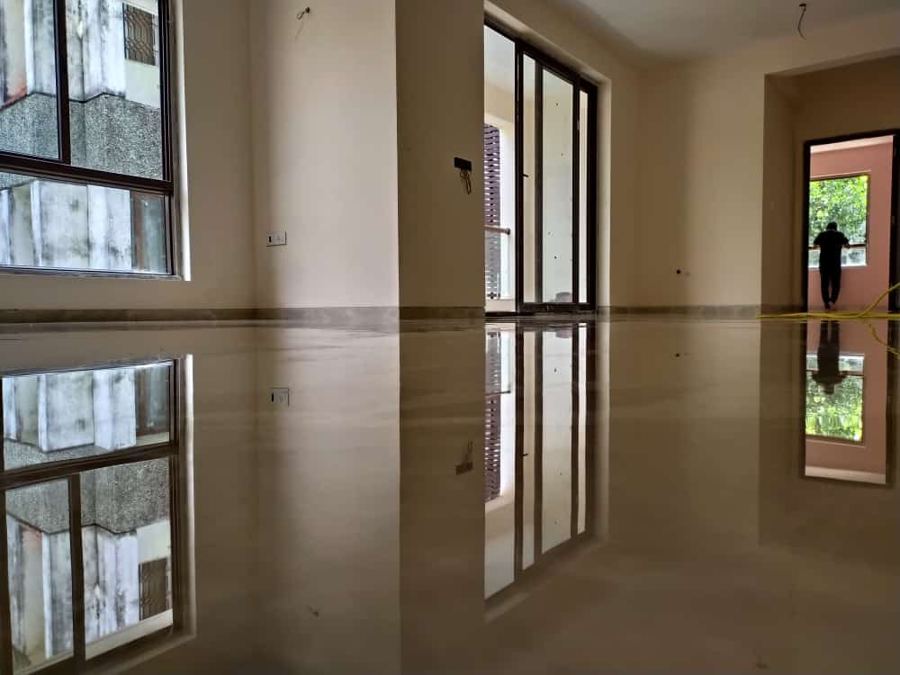
Look at the mark from a low angle against the light. If the surface around it is glossy but the spot itself looks matte, it is most likely an etch.
Act quickly on fresh spills
The faster you deal with a spill, the less of it soaks in.
- Blot, do not wipe. Press a clean, dry cloth or paper towel onto the spill. Wiping spreads it over a larger area.
- Rinse with plain water and blot again.
- Clean with a pH-neutral stone cleaner or a few drops of mild, neutral liquid soap in water, then rinse and dry the area completely.
Avoid vinegar, lemon, phenyl-based or acid toilet cleaners, and scouring powders on marble. They either etch the surface or scratch it.
Using a poultice for set-in stains
For a stain that has already soaked in, the standard method is a poultice: a paste that is spread over the stain, slowly pulls the liquid back out of the stone as it dries, and is then removed.
- Mix baking soda with water (or with the cleaning agent suited to the stain, see below) into a thick paste, like peanut butter.
- Spread it over the stain about 5–6 mm thick, a little wider than the mark.
- Cover it with plastic film and tape the edges. Poke a few small holes in the film.
- Leave it for 24–48 hours so it dries fully. The drying is what pulls the stain out.
- Remove the paste with a plastic or wooden scraper, rinse with water and dry the area.
Deep or old stains may need two or three applications. Always test any method on a hidden corner first, especially on coloured or dark marble.
Which mix to use for common stains
- Tea, coffee, food and turmeric (organic stains): a poultice made with hydrogen peroxide instead of water usually works well on light-coloured marble. Hydrogen peroxide can lighten dark stone, so test it first.
- Cooking oil, ghee and grease: these need to be drawn out with an absorbent. Use a baking soda poultice made with water and a few drops of mild liquid soap, and be patient; oil can take more than one round.
- Water rings and hard-water marks: on polished marble these are often deposits sitting on the surface. Try buffing with a dry, soft cloth first. If a ring remains and feels dull, it has probably etched and needs polishing.
- Rust stains from steel almirahs, gas cylinders, flower pots or grills: these are among the hardest to remove at home. Strong rust removers are often acidic and will etch the marble. It is safer to have a professional look at them.
Italian marble needs extra care
Italian marble is usually softer and more delicate than most Indian marble. It shows stains and etching more easily and reacts more to strong chemicals. On Italian marble, stick to pH-neutral cleaners, keep any home treatment gentle, and test on a hidden area first. If the stone already has dull patches, those need careful, stone-specific polishing rather than more chemicals.
Monsoon and dust season in Punjab
During the monsoon, muddy footwear and damp corners bring dirt and moisture onto the floor, and in the dry months fine dust acts like sandpaper on polished marble. Mats at every entrance, a daily dry dust-mop and wiping up wet footprints quickly go a long way towards preventing both stains and dull traffic paths.
Preventing stains in the first place
- Seal the marble with a good-quality stone sealer, especially in kitchens and dining areas. A sealer does not make marble stain-proof, but it gives you more time to wipe up a spill.
- Use coasters and trays under glasses, oil bottles and toiletries.
- Put plastic or felt pads under metal furniture, plant pots and cylinders so they cannot leave rust rings.
- Clean with a pH-neutral cleaner and dry the floor after mopping.
When to call a professional
Call in professional help if a stain has not lifted after two or three poultice applications, if the mark is a rust stain, if you have dull etch marks or water rings, or if the whole floor looks tired and patchy. Professional stain removal and polishing treats the stone itself, so the cleaned area matches the gloss of the rest of the floor instead of leaving a lighter or duller patch. You can read how this works in our guide to the marble polishing process.
Book a site visit
If a stain or dull patch on your marble will not come out, Onyx Stones can inspect the floor in Mohali or elsewhere in Punjab and share a clear quote before any work starts. Call or WhatsApp us on +91 78000 64168. We are open Monday to Sunday, 9 AM to 10 PM.