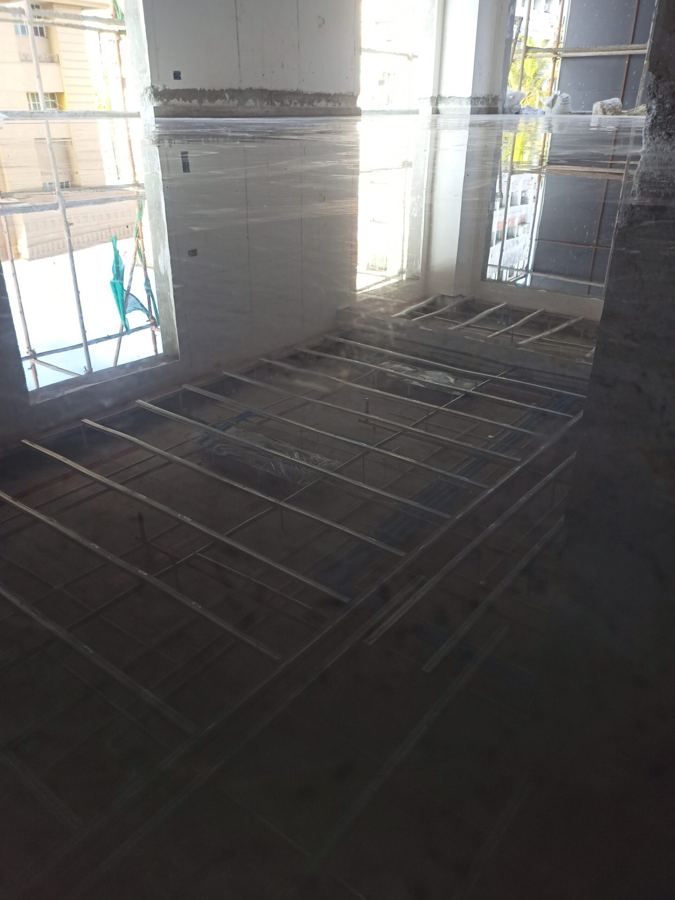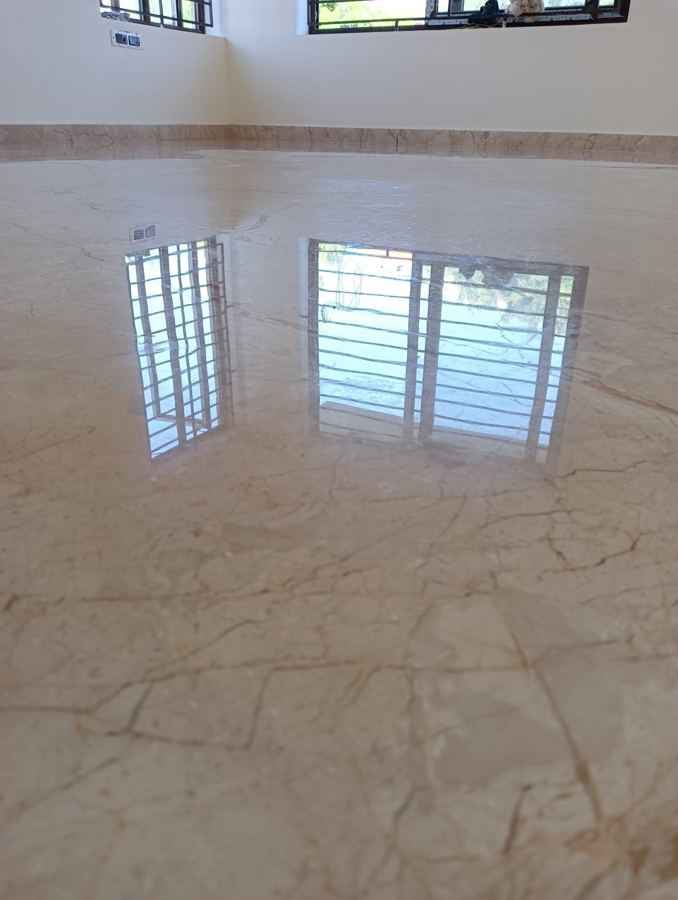

Many homes in Mohali and across Punjab get their marble floors laid while the rest of the house is still being finished. Painters, carpenters, electricians and plumbers then work on top of the new stone for weeks. The way the floor is treated in this period decides how good it looks on the day you move in. This guide explains how to look after newly fitted marble, from the first days after laying to the first polish.
The first days: let the floor set
Marble is laid on a bed of mortar or adhesive that needs time to set and dry. Walking on it too soon, or putting heavy loads on it, can disturb pieces, open joints or leave slabs slightly uneven. Follow your fitter's advice on when the floor can take foot traffic, and keep heavy items such as cement bags, ladders and stacks of wood off it until it has firmly set.
- Keep the room closed or roped off for the first period after laying.
- Do not wash the floor with lots of water while the bed is still drying.
- Report any piece that sounds hollow, rocks or sits higher than its neighbour, so it can be corrected before polishing.
Protect the marble while other work goes on
Construction dust, grit under shoes, dropped tools and dragged ladders are the biggest dangers for new marble. A little protection saves a lot of grinding later.
- Cover the floor. Lay thick paper, cardboard sheets or soft protective sheeting over the marble, taped at the joins. Avoid plastic sheets that trap moisture on a floor that is still drying.
- Make walkways. Keep the covering in place along the paths workers use most, such as doorways, passages and stairs.
- No cutting on the floor. Ask carpenters and tile workers to cut wood, tiles and metal outside or on a board, never directly on the marble.
- Pads under ladders and scaffolding. Rubber or cloth pads under ladder feet prevent scratches and chips.
- Mix cement and putty elsewhere. Mixing on the floor leaves stains and alkaline residue that can dull the surface.
Removing cement, putty and paint splashes safely
Some splashes land on the floor however careful everyone is. The wrong method can do more damage than the splash itself.
- Wipe fresh splashes at once with a damp cloth while they are still wet. This is by far the easiest way.
- Let dried drops soften. Place a damp cloth over dried putty or cement for a while, then lift it gently with a plastic scraper.
- Never use acid. Hydrochloric acid, strong tile or cement removers, vinegar and lemon etch marble at once and leave dull, rough patches.
- No steel scrapers or wire brushes. They scratch the stone, especially softer Italian marble.
- Paint drops: water-based paint usually lifts with a damp cloth when fresh. For dried or oil-based paint, test any solvent on a hidden spot first, and ask your polisher if unsure.
Small marks left after this are usually removed during polishing. Our guide on removing stains from marble covers oil, rust and water marks too.
Why new marble needs polishing
Freshly laid marble rarely looks finished. Slabs sit at very slightly different heights, joints are filled, and the surface carries marks from cutting, handling and building work. Polishing after fitting usually starts with grinding to level the joints and lippage, then moves through finer stages until the floor shines evenly from wall to wall. This is why we say good fitting makes a floor ready for a flawless polish. You can read the full sequence in our marble polishing process explained, and about deeper levelling in diamond polishing for marble.
When to plan the first polish
Polish once the mortar has set fully and the dusty work is over: after plastering, putty, painting and carpentry are done, but before furniture and curtains go in. Polishing too early means the shine gets scratched and stained by the work that follows; polishing after moving in means emptying the rooms again. Your fitter or polisher can check whether the floor is ready. To get the house ready on the day, see how to prepare your home for marble polishing.
The first weeks after moving in
- Put doormats at every entrance and dust-mop daily, because grit is what dulls a new shine first.
- Fit felt pads under furniture and lift it instead of dragging it when you arrange the rooms.
- Clean with plain water or a pH-neutral stone cleaner and a well-wrung mop; avoid acidic and bleach-based cleaners.
- Wipe spills such as tea, juice, oil and haldi quickly to avoid stains and etching.
- Light Italian marble shows marks more easily; our guide on Italian vs Indian marble care explains the differences.
Quick checklist
- Keep traffic and heavy loads off until the floor has set.
- Cover the marble and keep cutting and mixing off it.
- Wipe splashes fresh; never use acid or steel scrapers.
- Polish after the dusty work, before furniture goes in.
- Mats, felt pads and mild cleaners from day one.
Building or renovating in Mohali?
Onyx Stones handles marble fitting, marble polishing and diamond polishing for homes in Mohali and across Punjab, so the same team can lay your floor and give it its first polish. See our work in the project gallery, then call or WhatsApp us on +91 78000 64168, or send an enquiry. We are based in Sector 80, Mohali, and are open Monday to Sunday, 9 AM to 10 PM.